top of page

Our Latest Blog
Stay informed with the latest insights, trends, and developments in the world of cybersecurity. At ÒGÚN SECURITY RESEARCH AND STRATEGIC CONSULTING (OSRS), our blog features expert articles, in-depth analyses, and practical tips designed to enhance your understanding of cybersecurity challenges and best practices. Join our community of cybersecurity enthusiasts and professionals as we explore topics ranging from threat intelligence to AI governance and everything in between.


Oriire and the 9/11 Standard: Why the Oyo Commission Deserves an Open Mind
Governor Makinde has inaugurated a Judicial Commission of Inquiry into the Oriire school abduction, the first mass school kidnapping in Nigeria's South-West. Fifty-six days of captivity. Two teachers murdered, one beheaded on camera. Dr. Oludare Ogunlana argues the panel deserves the standard the 9/11 Commission set: truth in public, reform of failed systems, and a roadmap for recovery. He urges Nigerians to testify without fear and warns the world that Nigeria's stability is


When Bandits Collect Taxes: Kuku's Warning and the Crisis of State Authority in Nigeria
Kingsley Kuku's valedictory lecture at Igbinedion University names Nigeria's gravest threat: the progressive erosion of the state's monopoly of legitimate authority. When bandits tax farmers and communities obey armed groups over lawful government, sovereignty leaks community by community. OSRS examines why kinetic operations alone cannot lift the siege, and why decentralized policing, accessible justice, and accountable institutions are the path to rendering sub-state actors


The Ransom Nigeria Will Not Name: What the AFP Investigation Reveals About Trust, Terror Financing, and the Oriire Exception
An AFP investigation alleges Nigeria paid Boko Haram millions of dollars to free the Papiri schoolchildren, a claim the government denies. The truth of the payment matters less than what it exposes: a state whose denials no longer command belief, a ransom economy financing the insurgency against it, and a lesson from Oriire that counterterrorism succeeds where communities stand with the government. No price is too high to save a child. However, transparency is the price of pu


Cutting the Convergence: How the NDLEA's War on Drugs Is Winning Nigeria's War on Terror
Nigeria's war on drugs is counterterrorism by another instrument. Applying routine activity theory, this analysis shows how the NDLEA under General Marwa is breaking the convergence that sustains terrorism: cutting the tramadol supply that chemically fuels Boko Haram and ISWAP fighters, and inserting capable guardianship along trafficking routes. With over 77,000 arrests and 14.8 million kilograms seized since 2021, drug interdiction is degrading terrorist power without a sin


Why Terrorism Persists in Nigeria: What the Latest U.S. Visit Reveals
A new U.S. Assistant Secretary of State has arrived in Abuja with familiar promises: intelligence sharing, capacity building, and accountability for perpetrators of violence. Yet after sixteen years, terrorism in Nigeria endures. In this analysis, OSRS argues that the insurgency survives not because Nigeria lacks foreign partners or firepower, but because ungoverned spaces, a broken justice system, mass recruitment pools, and a profitable conflict economy remain untouched.


The Human Robot: How Boko Haram Turned AI Into a Weapon of War
For years, terrorists used technology mostly to spread propaganda and raise money. Now the line has moved. Research covered by The New York Times shows Boko Haram and ISWAP fighters using AI chatbots to fix weapons, make bombs deadlier, and plan attacks in northeast Nigeria. One former commander called it "a human robot." This is not a story about superhuman terrorists. It is about a falling knowledge barrier, and a governance gap Nigeria must close before the next attack str


Oriire Rescue: Lessons, Law Enforcement Patience, and Political Will
After 56 days, the pupils and teachers abducted from three schools in Oriire, Oyo State, are free. No ransom. No prisoner exchange. An intelligence-led joint operation dismantled the terrorists' network until they unconditionally released their captives. OSRS examines the DSS and NIA work, the patience of the joint forces, the political will of Governor Makinde and President Tinubu, and the lessons Nigeria must institutionalize so Oriire becomes a template for the future, not


Why Nigeria's Security Crisis Is Also a Battle for Public Trust
Nigeria faces violence on many fronts, but the deeper contest is for what the public believes about its own government. Terrorists use viral videos, drones, and disinformation to convince citizens the state cannot protect them. This OSRS analysis explains the perception war in plain terms, shows why political division strengthens the enemy, and outlines how accountability, honest communication, and information defense rebuild public trust and national resilience.


Oyo School Abductions: A Nation's Test and the Long Road Home
On 15 May 2026, terrorists abducted forty-six pupils and teachers from three schools in Oriire Local Government Area of Oyo State. One teacher has been killed in captivity. The youngest victim is two years old. Twelve days later, the children remain in the forest. OSRS commits its full advisory weight to their safe return, and our Founder and CEO will be on the ground in Nigeria. Read the names. Remember the faces. The people of Oyo State will not rest until they are home.


The U.S. and Nigeria Just Eliminated ISIS's Second-in-Command. Here Is What It Means.
The elimination of Abu-Bilal al-Minuki, described by President Trump as the second-in-command of ISIS globally, marks a turning point in U.S.-Nigeria security cooperation. Conducted on May 15, 2026, the joint operation signals that West Africa has moved from a theater of concern to an active operational front. OGUN Security Research breaks down what happened, why it matters, and what comes next for the region.


Nigeria's Security at a Crossroads: What the Ribadu-Vance-Rubio Meeting Means for the 2027 Election
National Security Adviser Nuhu Ribadu's Washington visit with Vice President J. D. Vance and Secretary of State Marco Rubio resets a fractured Nigeria-United States relationship eight months before the January 2027 election. The Joint Working Group framework promises counterterrorism cooperation, intelligence sharing, and border security support. However, the partnership carries strategic costs that could shape the political verdict on the Tinubu administration. OSRS examines


Nigeria Is Burning: What the World Is Missing While Watching the US-Iran War
As the world focuses on the US-Iran conflict, ISWAP, the world's most active ISIS affiliate, has declared a caliphate in Nigeria, overrun 16 military bases, and abducted hundreds of civilians. Dr. Sunday Ogunlana of OSRS breaks down the crisis, the ISIS global network behind it, and what security professionals and policymakers must do now.


Cybercrime, Terror Financing, and Online Payment Rails
Online payment rails power modern commerce, but they also enable cybercrime and terror financing. From peer to peer apps to cryptocurrency, illicit actors exploit speed, scale, and anonymity. This article explains how fintech abuse creates counterterrorism intelligence gaps and what policymakers, security leaders, and institutions must do to respond.


Nigeria’s Counterterrorism Moment: What Must Change Now
Nigeria continues to face deadly terrorist attacks despite existing laws and operations. This article explains why enforcement matters more than declarations, how grievances fuel recruitment, and what national leaders must do now. Written for beginners, it breaks down counterterrorism in clear terms and outlines practical steps to reduce violence and restore public trust.


Why Many Nigerians Believe Terrorism Persists by Choice and Why U.S. Strikes Changed the Conversation
Many Nigerians believe terrorism persists not because of lack of capacity, but because insecurity benefits powerful interests. U.S. strikes against ISIS-linked targets intensified this debate, exposing deep public distrust in government counterterrorism efforts. This article explores why citizens justify foreign intervention and what it means for security policy and trust.


Nigeria’s Terrorism Designations and the Power of Material Support Prevention
Nigeria’s expanded terrorism designations reflect a preventive counterterrorism strategy focused on material support. This article explains how targeting financiers, facilitators, and enablers can disrupt violence before attacks occur, and why governance and due process determine success.


Amnesty for Bandits? Why Sheikh Ahmad Gumi’s Analogy to the Israel–Hamas Peace Deal Misses the Mark
Sheikh Ahmad Gumi’s call for dialogue with Nigeria’s bandits draws a false parallel to the Israel–Hamas peace deal. The bandits ravaging the northwest are not ideologues but profit-driven criminals. Treating them as political actors legitimizes violence and weakens justice. True peace lies in governance, intelligence, law enforcement, and accountability—not in appeasing predators.


Africa’s Escalating Security Crisis: Why Public-Private Partnerships Are Urgently Needed
Africa faces rising threats from cyberattacks and terrorism, exposing vulnerabilities in both digital and physical security. From major data breaches to armed insurgent takeovers, the crisis demands urgent public-private collaboration. Governments alone cannot combat these complex threats. OSRS urges joint action to build a resilient and secure Africa.

Navigating the Nexus of Insecurity: What Nigeria Must Do Before the 2027 Elections
Nigeria is facing a deepening security crisis marked by terrorism, kidnappings, and public distrust. As the 2027 elections approach, bold reforms in intelligence, policing, and governance are critical. In this podcast episode, Dr. Oludare Ogunlana offers insights, global lessons, and urgent recommendations to restore national stability.
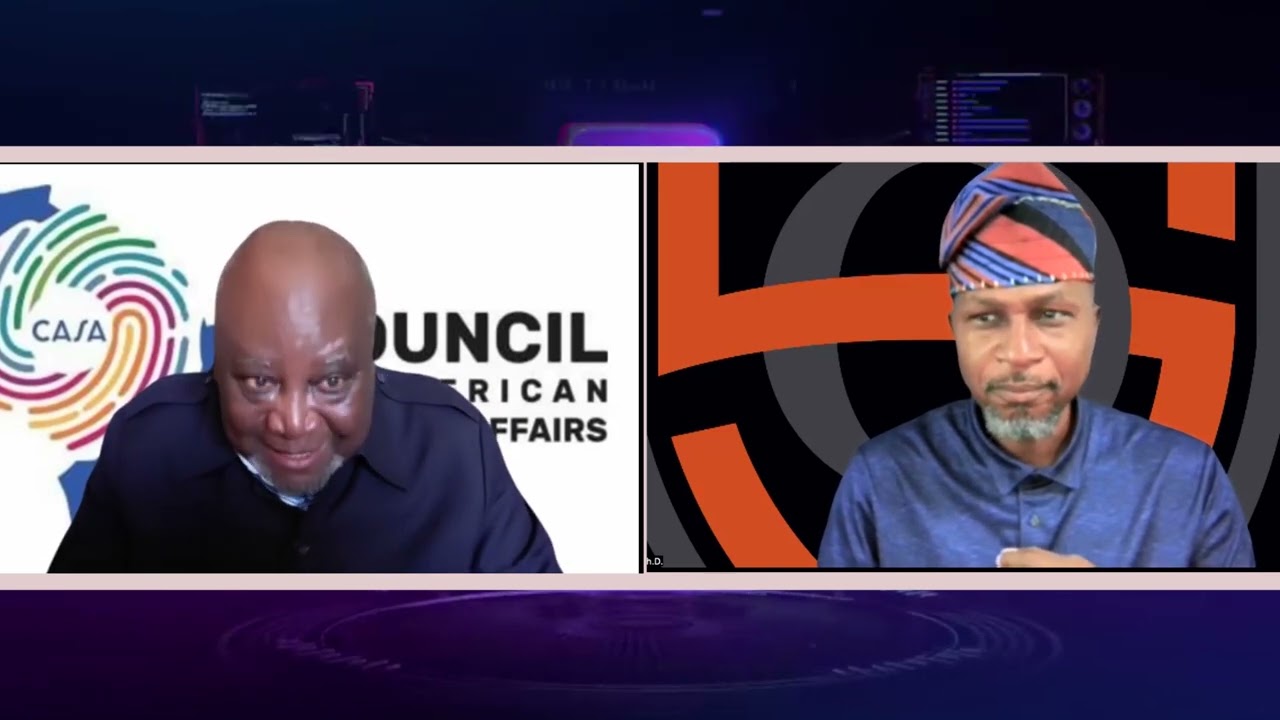
Navigating Leadership in Crisis: Strategies for Addressing Nigeria's Security Challenges
In this episode of the OSRS Leadership Series, Dr. RSB Bello-Fadile, retired Nigerian Army Colonel and Chairman of CASA, discusses Nigeria’s security failures, the urgent need for doctrinal reform, and the role of strategic leadership in shaping a stable future ahead of the 2027 elections. Hosted by Dr. Oludare Ogunlana.
bottom of page