
Oyo State's Surveillance Aircraft: A Bold Step That Must Not Fly Alone

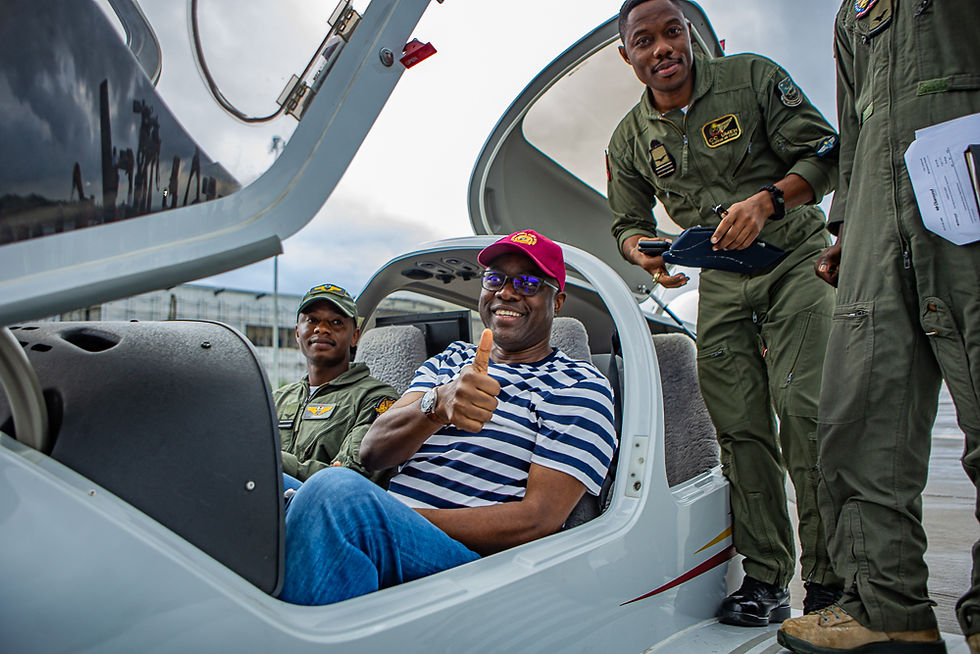
On July 28, 2026, two Diamond DA42 MNG surveillance aircraft touched down at Samuel Ladoke Akintola Airport in Ibadan. Governor Seyi Makinde stood on the tarmac to receive them. The ₦7.76 billion acquisition makes Oyo one of the few Nigerian states to invest in dedicated Intelligence, Surveillance, and Reconnaissance (ISR) aircraft.
Governor Makinde deserves commendation. He set an example for subnational security leadership in Nigeria. He recognized a simple truth: Oyo State covers more than 28,000 square kilometers, and no ground patrol can watch that space alone. The aircraft will help security agencies, including the Amotekun Corps, monitor forest corridors and the porous borders with Kwara State and the Republic of Benin.
However, an aircraft is a sensor, not a solution. Surveillance is passive. It sees. It does not act. The question now is what happens after the camera captures a threat.
Why the Aircraft Cannot Stand Alone
Think of the aircraft as an eye. An eye without a brain and hands cannot stop a kidnapper. In modern security operations, that brain is a fusion center: a secure facility where trained analysts merge aerial video, phone intelligence, community tips, and police reports into one operational picture.
"An aircraft is a sensor, not a solution. Without a fusion center, aerial footage becomes expensive video nobody acts on in time."
Therefore, Oyo State should connect the aircraft to a strategically located fusion center equipped with cyber assets. That means:
Secure data links that stream aircraft video to analysts on the ground in real time
Artificial intelligence tools that flag suspicious movement automatically
Cyber and communications analysis capabilities, coordinated lawfully with federal agencies
Direct dispatch channels to Amotekun and police response teams
The Oriire school abduction taught this lesson painfully. Intelligence that arrives late rescues no one.
The Limitations Leaders Must Plan For
Every aircraft program faces predictable risks. Nigerian states have purchased aircraft before, only to see them grounded within a few years. Governor Makinde can avoid that fate by planning now for:
Maintenance. Spare parts, sensor repairs, and engine overhauls require foreign suppliers and foreign exchange. A sustainment budget matters more than the purchase price.
Training. Pilots, sensor operators, and intelligence analysts need continuous certification. People, not machines, produce intelligence.
Continuity. Security programs must outlive administrations. Legislation and dedicated funding lines protect the investment beyond 2027.
Building 21st Century State Policing
Moreover, this acquisition should anchor a larger vision. As Nigeria debates state policing, Oyo can prepare its future force today. A modern state police service needs digital radios, body cameras, forensic labs, cybercrime units, and data-driven command centers. The aircraft should be the first asset in that inventory, not the last.
"Equip the officers of tomorrow today. The aircraft should be the first asset in a 21st century state policing inventory, not the last."
The Path Forward
Governor Makinde has shown vision. Nevertheless, vision requires architecture. The aircraft must feed a fusion center. The fusion center must feed responders. The whole system must be maintained, staffed, and funded for the long term.
OGUN Security Research and Strategic Consulting LLC (OSRS) helps governments design exactly this architecture. Our team advises on fusion center development, ISR integration, training pipelines, and sustainment planning. Visit www.ogunsecurity.com to start the conversation.
Found this analysis valuable? Share it with a colleague and subscribe to our email list for weekly intelligence briefs.
Enjoyed this article? Stay informed by following us on Google News, Twitter, and LinkedIn for more exclusive cybersecurity insights and expert analyses.
About the Author
Dr. Oludare Ogunlana is the Founder and CEO of OGUN Security Research and Strategic Consulting LLC (OSRS), a Professor of Cybersecurity, and a national security scholar who advises global intelligence and policy bodies on African security, intelligence architecture, and AI governance.


Comments