
ShinyHunters: Inside the Cybercrime Syndicate Reshaping Global Data Extortion

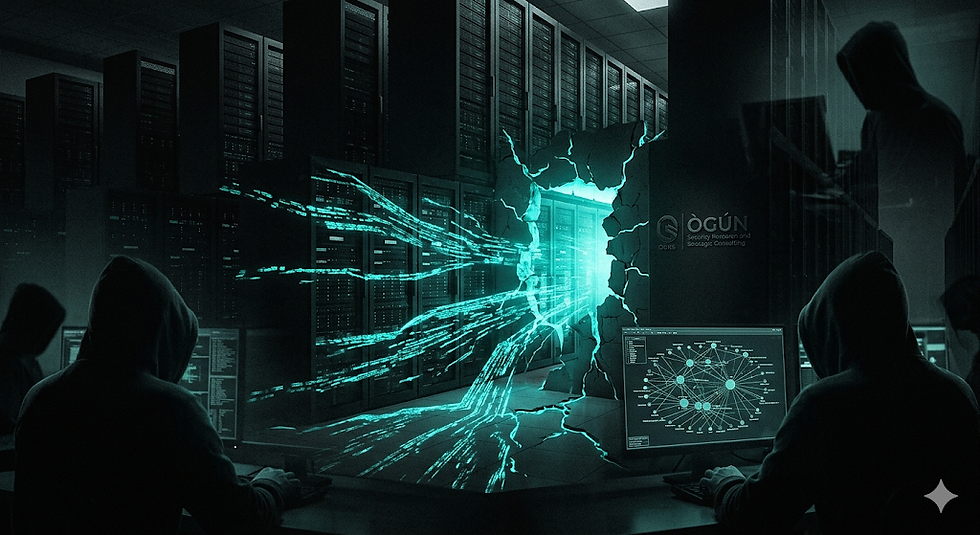
A loose federation of young, financially driven hackers known as ShinyHunters has become one of the most disruptive cybercrime forces of the decade. Active since 2020, the group has stolen records from hundreds of millions of users, extorted corporations from Silicon Valley to Paris, and continues operating despite high-profile arrests across France, Morocco, and the United States. For military, intelligence, law enforcement, and corporate leaders, the ShinyHunters cybercrime group now represents a defining test of modern data defense.
Who Are the ShinyHunters?
ShinyHunters first surfaced on dark-web marketplaces selling stolen corporate databases. The group is decentralized, with confirmed members in France and deep ties to the broader English-speaking criminal ecosystem known as "The Com." In 2025, ShinyHunters formed a working alliance with Scattered Spider and LAPSUS,brandedonlineas"ScatteredLAPSUS, branded online as "Scattered LAPSUS,brandedonlineas"ScatteredLAPSUS Hunters." Google's Threat Intelligence Group tracks the cluster under the aliases UNC6040 and UNC6240. There is no state sponsor. Their motive is pure profit through the sale, auction, and extortion of stolen data.
Tactics and Techniques
The group rarely relies on advanced malware. Instead, ShinyHunters weaponizes human trust through cloud-native social engineering.
Voice phishing (vishing): Operators impersonate IT support and walk employees through fraudulent Salesforce or Okta authorization flows.
OAuth and token abuse: Compromised Salesloft Drift, Gainsight, and Mixpanel integrations bypass multi-factor authentication and silently exfiltrate cloud CRM data.
Smishing and credential phishing: SMS lures and cloned login pages seed most campaigns.
AI-enabled deception: Recent operations show synthetic voice and tailored social engineering deployed at scale.
Major Breaches Behind the Name
The roll call is staggering. ShinyHunters has been credibly linked to intrusions at AT&T Wireless, Santander, Ticketmaster, PowerSchool, Google, Cisco, Adidas, Qantas, Air France-KLM, Allianz Life, Workday, TransUnion, Coinbase, and LVMH luxury houses, including Louis Vuitton, Dior, and Tiffany & Co. In late 2025, supply-chain compromises at Salesloft, Gainsight, and Mixpanel cascaded into hundreds of downstream victims, exposing data tied to OpenAI, Pornhub, and SoundCloud users. In May 2026, the group claimed to have stolen 275 million records from Instructure's Canvas learning platform, affecting nearly 9,000 schools and universities, including the University of Pennsylvania.
Why Law Enforcement Struggles
French authorities arrested four suspected administrators in June 2025, and a U.S. court sentenced French national Sébastien Raoult to three years in prison in 2024. However, operations continued without interruption. The group's resilience reflects three structural challenges:
Distributed membership across jurisdictions with uneven extradition cooperation.
Anonymizing infrastructure routed through privacy registrars such as Njalla and rotating Telegram channels.
Replaceable personas. When one handle falls, another quickly takes its place.
Moreover, social engineering bypasses most technical defenses, forcing prosecutors to chase symptoms rather than root causes.
What Organizations Can Do
Defense against ShinyHunters demands a shift from perimeter thinking to identity and supply-chain discipline. Priority steps include:
Train help desks and frontline staff to recognize vishing scripts and OAuth approval traps.
Inventory every connected SaaS application and revoke unused tokens.
Enforce phishing-resistant multi-factor authentication.
Monitor anomalous API and bulk data export activity.
Tier vendors by risk and demand breach attestations after incidents.
The Bottom Line
ShinyHunters succeeds because organizations underestimate the human layer. Therefore, the most urgent investment is not another firewall, but disciplined identity governance and a vigilant workforce.
OSRS supports clients across government, finance, education, and critical infrastructure to assess vendor exposure, harden cloud identity controls, and build incident response playbooks tailored to data-extortion threat actors. Our analysts deliver intelligence-grade briefings and executive tabletop exercises that translate raw threat reporting into board-level decisions.
Author Bio: Dr. Sunday Oludare Ogunlana is Founder and CEO of OSRS, a Professor of Cybersecurity, and a national security scholar advising global intelligence and policy bodies. His work focuses on cyber threat intelligence, AI governance, and the protection of enterprises from transnational extortion networks.
Intelligence. Protection. Strategy.
Enjoyed this article? Share it with your network and subscribe to our email list. Stay informed by following us on Google News, Twitter, and LinkedIn for more exclusive cybersecurity insights and expert analyses.


Comments