
Trump’s AI Executive Order and the Future of State AI Laws: What It Means for America


A New Federal Push on Artificial Intelligence
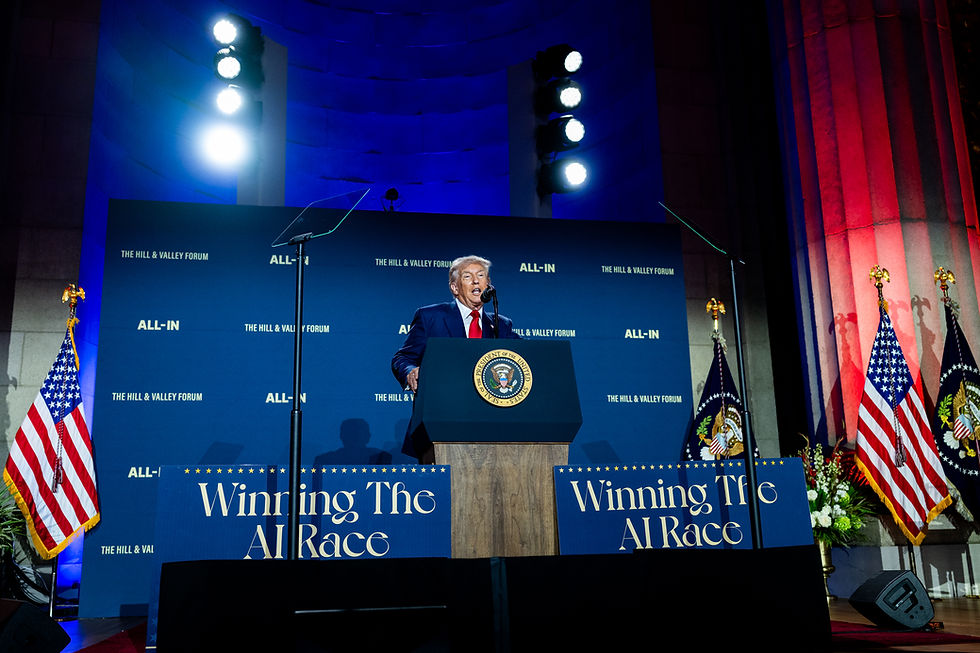
Artificial intelligence now shapes hiring, healthcare, finance, policing, and national security. States responded by passing their own AI laws. That patchwork has triggered a sharp federal response. On December 11, President Trump signed an Executive Order aimed at reshaping how AI is governed in the United States.
The Order does not ban state AI laws outright. However, it signals a major shift. The federal government now seeks to limit how far states can go in regulating private-sector AI. This move matters for students learning AI governance, for researchers studying regulation, and for professionals deploying AI systems across state lines.
Why the Federal Government Is Challenging State AI Laws
Over the past few years, states passed more than 130 AI-related laws. Some target algorithmic discrimination. Others focus on transparency or automated decision-making. Colorado’s AI law stands as a key example.
The Executive Order argues that this state-by-state approach creates uncertainty. It claims that inconsistent rules slow innovation and weaken U.S. competitiveness in AI.
The Administration frames AI leadership as a national security and economic priority. From this view, fragmented regulation threatens America’s ability to lead in global AI development.
What the Executive Order Actually Does
The Order outlines a coordinated federal strategy. It relies on enforcement pressure, funding leverage, and future legislation.
Key actions include:
The Department of Justice will create an AI Litigation Task Force to challenge state laws viewed as conflicting with federal AI policy.
The Department of Commerce will review existing state AI laws and identify those considered overly restrictive.
States labeled as having onerous AI laws may lose access to certain federal broadband and digital equity funds.
Federal agencies will explore grant conditions tied to state AI enforcement choices.
The Administration will prepare a proposal for a uniform federal AI framework that could preempt conflicting state laws.
The Order preserves state authority in limited areas such as child safety, government use of AI, and data center infrastructure.
What This Means for Professionals and Institutions
The Order does not end state AI regulation. Courts and Congress still matter. However, the practical impact begins now.
For organizations operating nationally, compliance remains complex. State laws still apply unless courts block enforcement. Enterprises must balance fairness, transparency, and explainability without triggering claims of compelled speech or altered outputs.
For policymakers and researchers, the Order raises constitutional questions about federal preemption and state authority. For intelligence and law enforcement practitioners, it highlights the tension between innovation, civil liberties, and national security priorities.
Students studying cybersecurity, privacy, and AI governance should view this moment as a live case study in U.S. regulatory power.
Why This Debate Will Shape the Next Decade of AI Governance
This Executive Order marks a turning point. It frames AI regulation not just as a consumer protection issue, but as a strategic competition issue. Legal challenges will follow. Congressional action may come next.
The outcome will determine whether AI governance in the United States remains state-driven or becomes federally centralized. That decision will affect innovation, accountability, and public trust.
How OGUN Security Research and Strategic Consulting LLC Can Help
OGUN Security Research and Strategic Consulting LLC helps organizations, agencies, and academic institutions navigate AI governance, privacy compliance, and cybersecurity risk. We support policy analysis, AI risk assessments, training programs, and regulatory readiness.
If your organization deploys AI or studies its impact, this moment demands informed action.
Encourage dialogue. Share this article. Subscribe to our email list. Enjoyed this article? Stay informed by following us on Google News, Twitter, and LinkedIn for more exclusive cybersecurity insights and expert analyses.
Author
Dr. Oludare Ogunlana is a cybersecurity scholar, intelligence analyst, and Principal Consultant at OGUN Security Research and Strategic Consulting LLC. He teaches cybersecurity and AI governance and advises public and private sector organizations on risk, policy, and compliance.


Comments