
Windsor and the World: Why Britain Is Turning to Its Former Colonies in the Age of Trump

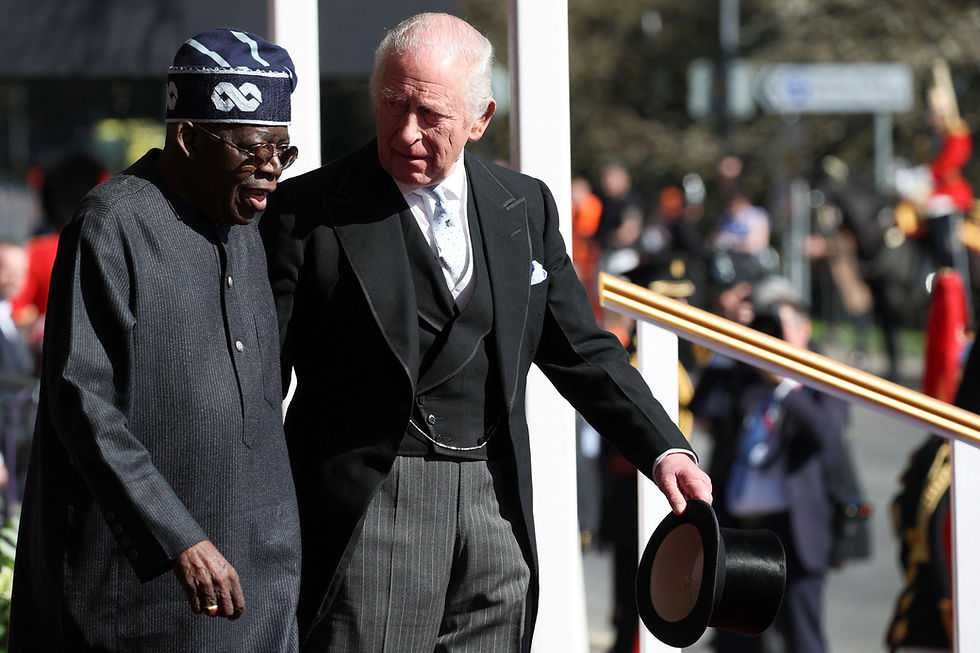
WINDSOR, England — On March 18, 2026, the full weight of British royal ceremony was placed at the feet of a Nigerian president for the first time in nearly four decades. King Charles III and Queen Camilla, flanked by Prince William and Princess Catherine, welcomed President Bola Ahmed Tinubu and First Lady Oluremi Tinubu to Windsor Castle with a 42-gun salute, a carriage procession, and more than 1,000 troops on ceremonial display. The streets were lined with both the Union Jack and the green-and-white of Nigeria.
The pageantry was striking. But the strategy behind it was more revealing. This was not nostalgia. It was calculation. And to understand why Britain chose this moment to renew its relationship with its most populous former colony, one must understand three interlocking forces: the turbulence of Trump's America, the commercial weight of a rising Nigeria, and the quiet repositioning of a post-Brexit Britain searching for new anchors in an unstable world.
The Trump Factor: When Your Closest Ally Becomes Unpredictable
For security and intelligence professionals, the concept of alliance reliability sits at the foundation of strategic planning. When that reliability erodes, states must diversify. That is precisely where Britain finds itself today.
In January 2026, the Trump administration imposed a 10% tariff on British goods, threatening to raise it to 25% unless London acquiesced to American demands over Greenland. Britain refused. The tariff threat was eventually walked back, but the damage to the so-called Special Relationship was real and visible. Key pressure points include:
Washington's willingness to weaponize trade policy against NATO allies over unrelated territorial disputes.
The Trump administration's open hostility toward European governments and multilateral institutions.
Britain's refusal to allow US military use of RAF Fairford and Diego Garcia for strikes on Iran, further straining the alliance.
A steep drop in Republican favorability toward the UK, from 84% in 2025 to 64% in 2026, signaling a structural shift in American political sentiment.
For Britain's Starmer government, the lesson has been stark: overdependence on Washington is a strategic liability. The pivot to former colonies and Commonwealth partners is, in large part, a hedge against American unpredictability.
Nigeria Is No Longer a Recipient. It Is a Partner.
For decades, the UK-Nigeria relationship was framed in the language of development aid, emigration policy, and anti-corruption cooperation. That framing is now obsolete. The numbers tell a different story.
Bilateral trade between the two countries now stands at an all-time high of £8.1 billion per year. Nigerian financial institutions and fintech firms are expanding rapidly into the UK market:
Seven Nigerian banks now operate in the UK, supporting at least 1,000 jobs.
Nigerian fintech firm LemFi has committed £100 million in UK investment over five years, with London designated as its global headquarters.
Kuda Bank is expanding its UK headquarters to serve as a platform for global growth.
Nigeria's diaspora remittances reached approximately $21 billion in 2024, with a significant share originating from Nigerians resident in the UK.
Nigeria is also a critical energy supplier, with oil and gas exports forming the backbone of its trade with Britain. President Tinubu's economic reform agenda, including the removal of fuel subsidies and exchange rate unification, has made Nigeria a more credible partner for British capital. London is moving to lock in this opening.
The Commonwealth Gambit: Post-Brexit Britain Rebuilds Its Trading Architecture
Brexit severed Britain's preferential access to 450 million European consumers. It left the UK searching for alternative trade architecture at scale. The Commonwealth, with 56 member states and over 2.7 billion people, represents the most logical framework for that reconstruction.
Nigeria, as Africa's largest economy and most populous democracy, sits at the center of any credible Commonwealth trade strategy. But Britain's outreach is also defensive. China's Belt and Road Initiative has deepened infrastructure investment across Africa. Russia has expanded influence across the Sahel through the Africa Corps. Gulf states are making aggressive moves into African financial and agricultural markets. If Britain does not re-engage its former colonies with genuine economic substance, it risks ceding them to competitors who will.
The UK-Nigeria Enhanced Trade and Investment Partnership (ETIP) formalizes this commitment across priority sectors:
Financial services and fintech regulation
Technology and applied AI research partnerships
Education, with UK universities expanding campuses and partnerships in Nigeria
Creative industries and the cultural economy, with a UK-Nigeria Season of Culture planned for 2028
Soft Power, Religion, and the Signal to the Global South
Intelligence professionals understand that state visits are not merely ceremonial. They are messaging events, and every detail of their design is intentional.
The decision to adapt the state visit programme to accommodate President Tinubu's Ramadan fast, removing the traditional welcome lunch, was the first such adjustment in a British state visit in nearly 100 years. The message was directed not only at Abuja, but at the broader Muslim-majority world watching from Dakar to Jakarta: that Britain, unlike the United States under Trump, is a respectful and accommodating Western partner. At a moment when American foreign policy is generating significant hostility across the Global South, this is powerful competitive positioning.
Princess Catherine's choice to wear a coat dress by young British-Nigerian fashion designer Tolu Coker was equally deliberate: a visual affirmation of Nigerian cultural presence within British identity, rather than a museum exhibit of colonial history.
The Carriage Carries More Than Two Leaders
The state visit of President Tinubu to Windsor Castle is a case study in how geopolitical disruption reshapes diplomatic behavior. A transactional and unreliable Washington, a post-Brexit Britain in search of new partners, a commercially ascendant Nigeria, and a Global South increasingly unwilling to accept secondary status have converged at precisely this moment to produce a historic realignment.
For military and intelligence practitioners, this shift matters strategically. New bilateral partnerships generate new intelligence-sharing frameworks, new defense cooperation agreements, and new corridors for countering shared threats, including terrorism, cybercrime, and illicit financial flows. For cybersecurity and AI professionals, the technology partnership dimensions of ETIP signal new regulatory convergence opportunities between London and Lagos. For policymakers, the visit is a reminder that the arc of global power is shifting, and that nations which act early to build genuine partnerships with emerging economies will shape the rules of the next order.
The carriage that rolled through Windsor today carried more than two heads of state. It carried the weight of 37 years of neglect, and the urgency of a world that no longer permits complacency.
How OSRS Can Help
OGUN Security Research and Strategic Consulting LLC (OSRS) provides intelligence analysis, geopolitical risk assessments, and strategic advisory services to organizations navigating complex global security environments. Whether your organization needs to assess the implications of shifting UK-Africa relationships on supply chains, cybersecurity posture, or regulatory compliance, OSRS delivers actionable intelligence grounded in rigorous research. Visit www.ogunsecurity.com to learn more or request a consultation.
Enjoyed this article? Share it with your network.
Stay informed by following OSRS on Google News, Twitter/X, and LinkedIn for exclusive intelligence insights and expert analysis. Subscribe to the OSRS email list at www.ogunsecurity.com and never miss a briefing.
AUTHOR BIO
Dr. Sunday Oludare Ogunlana is Founder and CEO of OSRS, a Professor of Cybersecurity, and a geopolitical intelligence scholar. He advises global security and policy bodies on emerging threats.


Comments